Atlantic Salted Herring
Zoute haring / Saltsild
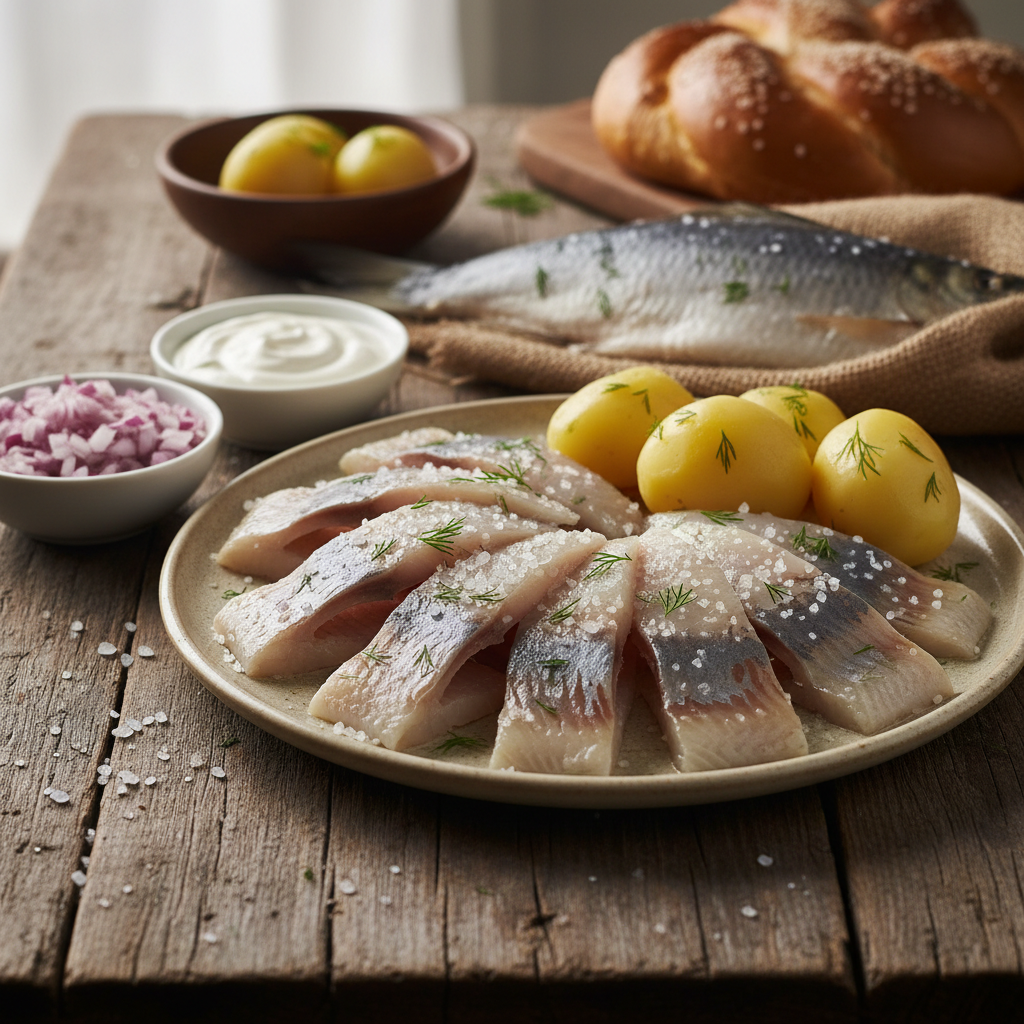
Salt-cured herring traded via Baltic routes, essential for communities with short growing seasons. A durable pantry fish of Northern Europe and Jewish trading communities, it is heavily brined for preservation, then soaked before eating as an everyday protein or pre-meal appetizer.
Ingredients
- •2 pounds Atlantic herring fillets
- •6 cups cold water
- •1 cup kosher salt
- •2 tablespoons sugar, optional for balance
- •1 tablespoon black peppercorns
- •2 bay leaves
- •1 teaspoon whole allspice
- •1 small onion, sliced, optional for serving
- •1 tablespoon vinegar, optional for soaking water
Instructions
- 1
Rinse the herring fillets and check that they are clean and properly trimmed.
- 2
In a nonreactive bowl or container, dissolve the kosher salt in the cold water to make a strong brine; add the peppercorns, bay leaves, and allspice.
- 3
Submerge the herring fully in the brine, weighting it down if necessary so all pieces remain covered.
- 4
Refrigerate the fish for 24 to 48 hours, depending on thickness and desired saltiness.
- 5
Remove the herring from the brine and store chilled if using soon, or continue in fresh brine for longer preservation.
- 6
Before serving, soak the herring in cold water for 30 minutes to 2 hours, changing the water as needed to reduce the salt level.
- 7
Taste a small piece; if still too salty, continue soaking briefly.
- 8
Slice into serving pieces and, if desired, garnish with onion or serve with bread and potatoes.
- 9
Serve cold as an everyday or pre-meal protein.
Kosher notes
Use kosher-certified herring and kosher salt. Because herring is cured rather than cooked, maintain strict refrigeration and use clean kosher utensils and containers.
Comments (0)
No comments yet — be the first to share.